
The question can Americans travel to Cuba sits in a category of its own among travel queries — not because the answer is complicated to understand, but because the gap between what most Americans assume the answer is and what it actually is remains surprisingly wide in 2026.
Here is the short version: yes, Americans can travel to Cuba legally. The framework for doing so has been in place for years and remains intact in 2026. What has not changed is the requirement that every American visit falls under one of twelve specific categories authorized by the United States government. Pure recreational tourism — the kind where you book a resort, lie on a beach for a week, and call it a vacation — remains prohibited under federal law. Every other version of a Cuban trip, when structured correctly, is entirely legal.
I have researched the current rules thoroughly and spoken with travelers who made the trip in 2025 and 2026. What I found consistently is that Americans who go prepared have smooth, remarkable experiences. The friction that unprepared American travelers encounter in Cuba is almost entirely self-inflicted — and almost entirely avoidable with the right preparation. This guide closes that gap.
Can Americans Travel to Cuba in 2026? The Legal Framework
Understanding can Americans travel to Cuba legally requires knowing the current OFAC regulations. maintained by the US Department of the Treasury’s Office of Foreign Assets Control — universally known as OFAC. OFAC maintains a list of twelve authorized travel categories under which US citizens can legally visit Cuba. Every American who travels to Cuba must qualify under at least one of these categories and must be prepared to document that their trip activities align with their stated purpose.
This is not a technicality that travelers can quietly ignore. It is a self-certification requirement — meaning you declare your qualifying category rather than applying for individual government approval — but the expectation of genuine compliance is real. Travelers are required to keep records of their activities and financial transactions in Cuba for five years following the trip.
The twelve OFAC-authorized categories for can American travel to Cuba in 2026 are:
Family visits to close relatives who are Cuban nationals or permanent residents of Cuba. Authorized government work carried out by U.S. government staff and contracted service providers. Journalistic activity conducted by professional journalists and their support staff. Professional research and professional meetings directly related to a traveler’s professional background.Scholarly activities, from organized educational programs to exchange opportunities that promote learning and cultural understanding.
Religious activities organized by a religious institution. Open events involving live entertainment, interactive workshops, instructional clinics, and various sporting or competitive activities. Support for the Cuban people — the most widely used category for independent American travelers. Humanitarian projects directly benefiting Cuban communities. Activities of private foundations and research or educational institutes. The flow of information and media between the US and Cuba — covering both physical materials and digital transmission. Certain authorized export transactions.
The Support for the Cuban People Category

Of the twelve categories available to can Americans traveling to Cuba, the Support for the Cuban People authorization is the most practically relevant for independent travelers who are not journalists, academics, or government employees.
Travelers using this category should plan each day around experiences that positively impact local Cubans while avoiding activities that primarily support government-owned enterprises. In practical terms, this means staying in casas particulares — privately owned guesthouses run by Cuban families — rather than government-owned hotels. It means eating at paladares — privately owned restaurants — rather than state-run dining establishments. It means spending money at private businesses, hiring local guides who operate independently, and generally structuring your time around authentic community engagement rather than resort-style isolation.
Travelers who have used this category describe the resulting trip as the most genuinely immersive Caribbean travel experience they have had. The requirement to engage with private Cuban life rather than government tourism infrastructure consistently produces more interesting experiences than the resort-based approach would anyway.
A full-day schedule with no gaps and a clear itinerary connecting one authorized activity to the next is the practical standard most experienced Cuba travelers recommend maintaining. This does not mean every minute must be accounted for with documented proof — it means your overall trip structure should reflect the category you selected.
What Americans Need to Enter Cuba in 2026
Cuban Tourist Card
Every American traveling to Cuba needs a Cuban tourist card — also called a tarjeta de turista. This is a simple paper document rather than a stamp in your passport, which matters because Cuba does not stamp American passports, meaning your Cuba visit leaves no record in your travel documents.
The tourist card comes in two colors depending on how you are traveling. Pink cards are issued for direct flights between the United States and Cuba. Green cards apply to travelers routing through a third country such as Mexico, Canada, or the Bahamas.
Airlines operating direct US-Cuba flights typically sell tourist cards at the departure gate or include them in the ticket price — confirm this with your carrier before departure. Travelers routing through third countries generally purchase the green card in the transit country. Prices generally vary from approximately $25 to $85, depending on the place of purchase and the provider’s pricing.
D’Viajero Online Form
Cuba introduced a mandatory online entry form called the D’Viajero that all visitors must complete before arrival. This digital form collects health declaration information and travel details and must be submitted prior to boarding your flight to Cuba. The QR code generated by the form is presented at Cuban immigration upon arrival.
Complete this form carefully and keep the confirmation accessible on your phone or as a printed document. Cuban immigration processes move more smoothly when this paperwork is in order before you reach the desk.
Travel Insurance
Travel insurance is not optional for Americans visiting Cuba — it is a legal requirement under Cuban law. Cuban authorities require proof of health insurance valid within Cuba upon arrival. Many standard US health insurance policies do not cover Cuba at all due to the existing trade restrictions.
The most straightforward solution is purchasing Cuban-issued travel insurance on arrival at the airport, which is available at designated counters in the arrivals hall. Alternatively, several international travel insurance providers offer Cuba-compatible policies that can be purchased before departure. Confirm Cuba coverage explicitly with any provider before relying on an existing policy.
Cash Requirements
This is where American travel to Cuba requires the most advance preparation in 2026. US credit cards and debit cards — including Visa, Mastercard, and American Express — do not function in Cuba due to the financial restrictions that remain in place between the two countries. ATMs in Cuba do not accept cards issued by US financial institutions.
This means every American visiting Cuba must arrive with sufficient cash in hand to cover the entire trip. Cuban pesos (CUP) are the operating currency, though US dollars can be exchanged at Cuban banks and CADECA exchange offices. Euros and Canadian dollars are also widely accepted for exchange and in some tourist-facing businesses.
Experienced Cuba travelers recommend carrying more cash than you think you will need. Unexpected costs arise, exchange offices sometimes have limited hours, and the peace of mind that comes from having adequate cash reserves significantly improves the overall trip experience.
Where Can Americans Stay in Cuba?
Where you stay in Cuba is directly tied to which OFAC category you travel under, and the distinction matters practically as well as legally.
Casas Particulares
Casas particulares — private homes whose owners rent rooms to travelers — are the standard and strongly recommended accommodation for Americans traveling to Cuba under the Support for the Cuban People category. They are legal, affordable, and consistently deliver the kind of authentic local experience that government-run hotels cannot replicate.
Booking platforms including Airbnb list Cuban casas particulares and the booking process works similarly to booking any other accommodation on those platforms. The experience of staying with a Cuban family — sharing meals, learning about daily life, and building genuine connections — is consistently cited by returned travelers as the highlight of their entire trip.
The Government Hotel Blacklist
The US government maintains a list of Cuban entities — including specific hotels — with which American travelers are prohibited from doing business. This list, maintained by OFAC and updated periodically, includes hotels directly operated by Cuban military or government entities.
Before booking any hotel accommodation in Cuba, verify that the property does not appear on the current OFAC Cuba restricted list. The most straightforward way to avoid this complication entirely is booking casas particulares through established platforms rather than navigating the hotel blacklist at all.
How to Get to Cuba from the United States
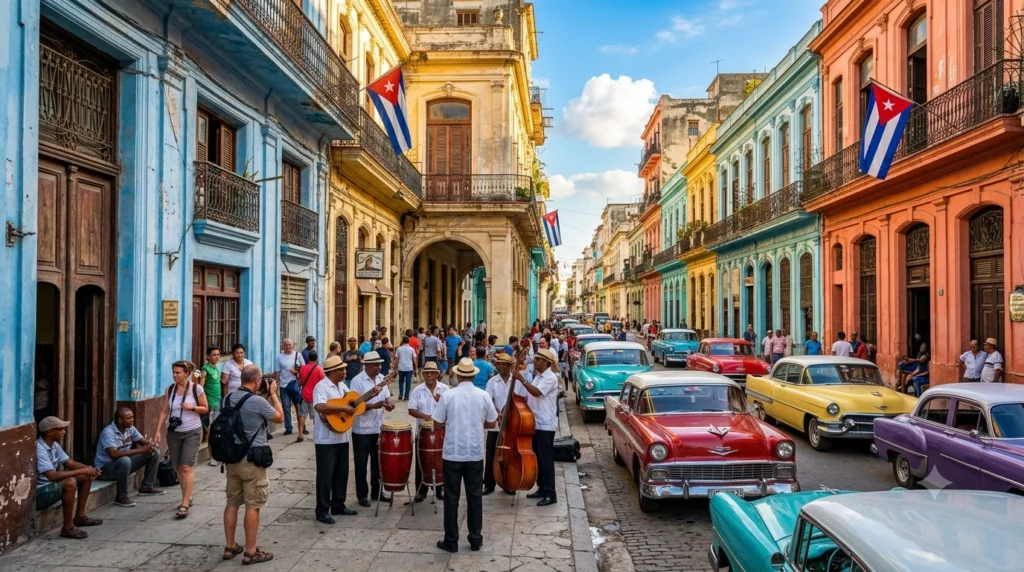
Direct commercial flights between the United States and Cuba operate from several major airports. Miami International Airport handles the highest volume of US-Cuba routes, with multiple daily flights operating. New York JFK, Los Angeles, Tampa, Fort Lauderdale, and several other US airports also have direct service to Havana’s José Martí International Airport and other Cuban airports.
Flight times from Miami to Havana run approximately 45 minutes. From New York the journey takes around three and a half hours.
Travelers also commonly route through third countries — most frequently Cancún, Mexico City, Nassau in the Bahamas, or Toronto — which is perfectly legal and sometimes produces better fares or scheduling options. Routing through a third country requires the green tourist card rather than the pink one.
Record-Keeping Requirements
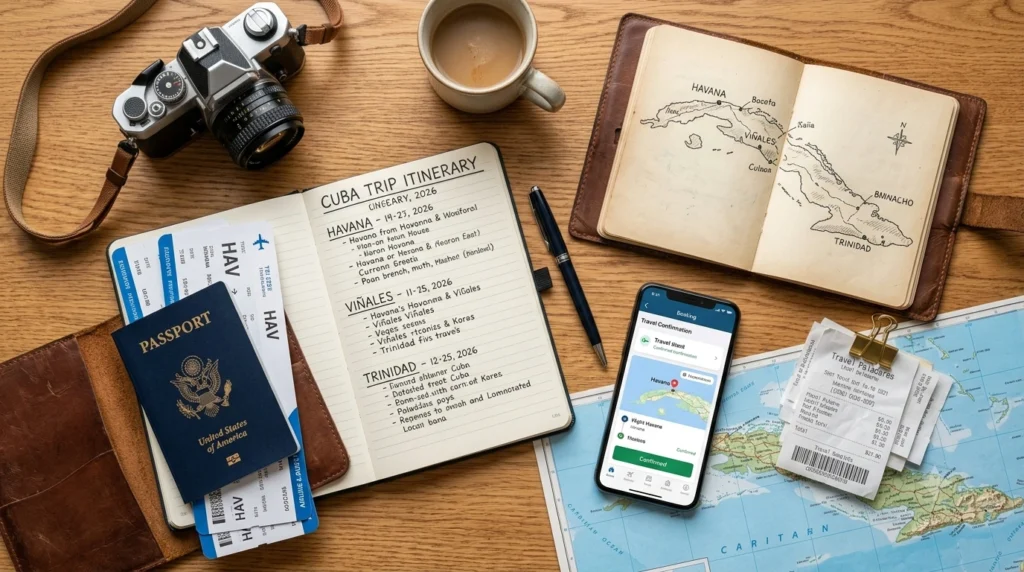
Americans who travel to Cuba are required by OFAC regulations to keep records of their Cuba trip activities and financial transactions for five years following travel. This requirement applies regardless of which of the twelve categories you traveled under.
Practical record-keeping includes saving receipts from casas particulares, paladares, local guides, and any other services purchased during the trip. Keeping a brief daily itinerary noting your activities and their connection to your stated travel category is the approach most recommended by experienced Cuba travelers and legal advisors who specialize in US-Cuba travel compliance.
This requirement sounds more burdensome than it is in practice. Most travelers who keep normal travel records — receipts, photos with timestamps, booking confirmations — already have the documentation that satisfies this requirement.
Practical Tips for Americans Visiting Cuba
Travelers searching can Americans travel to Cuba should prepare their itinerary and budget before departure. Download offline maps before departure. Mobile data connectivity in Cuba is improving but remains unreliable in many areas, particularly outside Havana. Google Maps offline downloads for Cuban cities work without connectivity once downloaded.
Learn basic Spanish phrases. English is less widely spoken in Cuba than in many Caribbean destinations. Basic Spanish dramatically improves daily interactions and is genuinely appreciated by Cuban locals.
Book casas particulares in advance for peak periods. The best-rated private guesthouses in Havana and Trinidad fill well in advance during high season. Booking ahead secures both availability and better options.
Keep your tourist card safe throughout your trip. You need the tourist card for departure as well as arrival. Losing it creates complications at the airport that are entirely avoidable.
Frequently Asked Questions
Can U.S. Citizens Legally Visit Cuba in 2026?
Yes. Americans can travel to Cuba legally in 2026 under twelve categories authorized by the US Department of the Treasury’s Office of Foreign Assets Control. Pure recreational tourism remains prohibited but the Support for the Cuban People category — which involves staying in private guesthouses, eating at privately owned restaurants, and engaging with Cuban community life — is widely used by independent American travelers and is fully legal when activities are genuinely structured around its requirements.
Which Documents Do Americans Need to Visit Cuba?
Americans traveling to Cuba need a valid US passport, a Cuban tourist card (pink for direct US flights, green for third-country routing), a completed D’Viajero online entry form, and proof of travel insurance valid in Cuba. US credit and debit cards do not function in Cuba so sufficient cash for the entire trip must be carried from departure.
Can Americans use credit cards in Cuba?
No. US-issued credit cards, debit cards, and ATM cards do not function in Cuba due to financial restrictions between the two countries. Americans visiting Cuba must carry sufficient cash — US dollars, euros, or Canadian dollars for exchange — to cover all expenses for the entire duration of their trip. This is one of the most important practical considerations for any American traveling to Cuba in 2026.
What is the Support for the Cuban People travel category?
The Support for the Cuban People category is the most commonly used OFAC authorization for Americans traveling to Cuba independently. It requires structuring your trip around activities that directly benefit private Cuban individuals and businesses — staying in casas particulares rather than government hotels, eating at privately owned paladares rather than state restaurants, and engaging with Cuban community life in ways that support the private rather than government economy.
Do Americans need a visa to visit Cuba?
Americans do not need a traditional visa to visit Cuba but do need a Cuban tourist card — a simple paper document purchased separately from your airline ticket or at the departure gate. The tourist card serves a similar function to a visa for entry purposes. Additionally, all visitors must complete Cuba’s mandatory D’Viajero online health and travel declaration form before departure and present the generated QR code at Cuban immigration upon arrival.
Conclusion
Can Americans travel to Cuba in 2026? Absolutely — and thousands do every year with excellent experiences. The legal framework is clear, the practical requirements are manageable with advance preparation, and the travel experience Cuba delivers is genuinely unlike anything else available in the Caribbean.
The key is understanding that American travel to Cuba requires intentional structuring rather than the default approach that works for any other Caribbean destination. Choose your OFAC category thoughtfully — most independent travelers use Support for the Cuban People. Arrive with sufficient cash. Stay in casas particulares. Keep your records. Complete the D’Viajero form before departure. Secure travel insurance valid in Cuba.
Do those things, and what awaits is one of the most distinctive travel experiences available to American travelers in 2026 — a country of extraordinary warmth, cultural richness, and genuine character that rewards every traveler who makes the effort to visit it correctly.
This article was researched and published by the online playmyworld Editorial Team to provide accurate, helpful, and up-to-date travel information for our readers.