

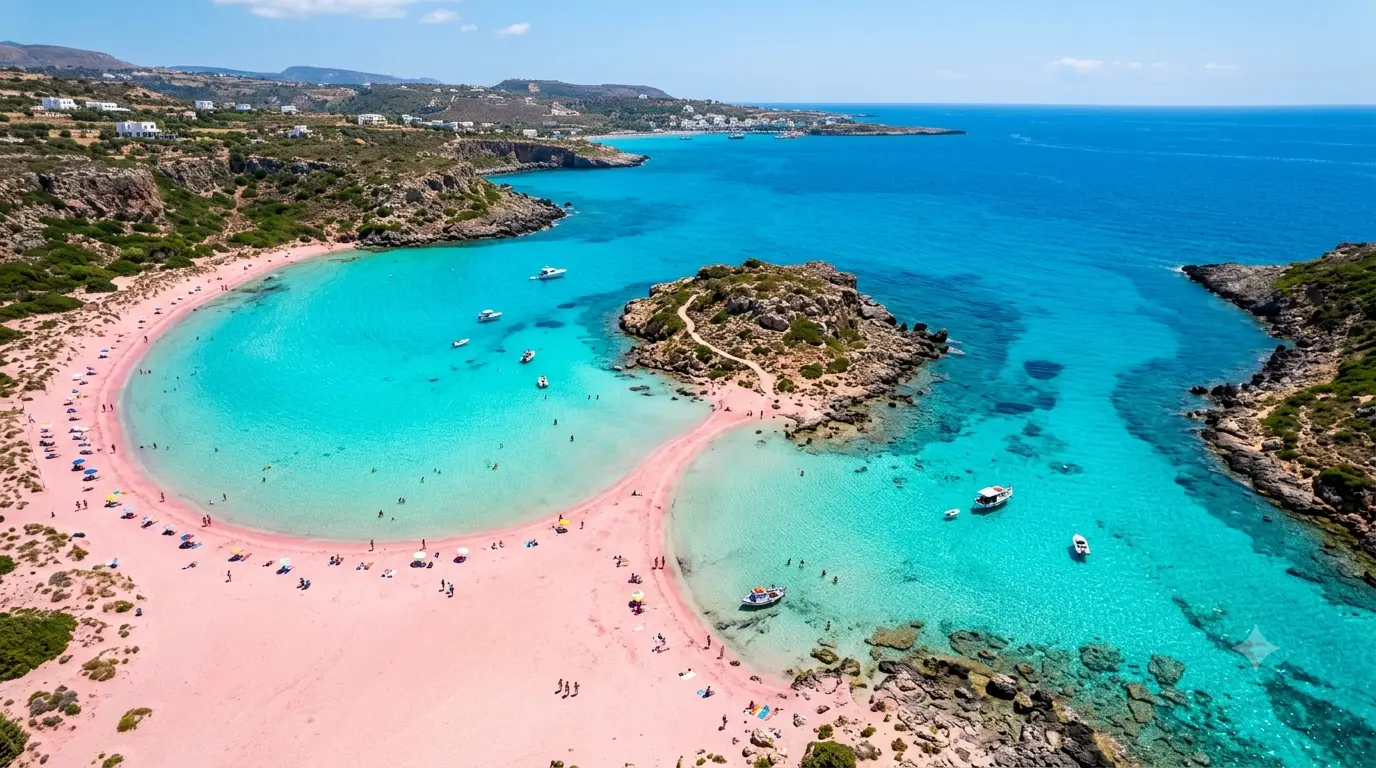
Greece has more coastline than most travelers can cover in a single trip. Over 6,000 islands scatter across the Aegean and Ionian seas. Each one carries a different version of what a Greek beach actually looks like — black volcanic sand in the Cyclades, pink lagoons in western Crete, white pebble coves in the Ionian, long golden stretches on the Dodecanese facing Turkey.
The best beaches in Greece do not sit in one place. They spread across multiple islands and multiple coasts in ways that reward deliberate planning over impulse booking. This guide covers exactly that — which beaches deliver what, which islands suit which travel style, and what to know before going anywhere.
Best Beaches in Greece — Full 2026 Island and Coastal Guide
Crete — Where Greece’s Best Beach Variety Actually Lives
Crete runs 260 kilometers from one end to the other. No other Greek island puts more beach types into a single geography. Pink lagoons sit at the western tip. Palm-backed river mouths cut through the southern coast. Long golden northern stretches handle summer crowds without losing their character. Remote Libyan Sea beaches sit at the end of dirt roads that most rental cars should not attempt.
Elafonisi Crushed coral shells give the sand a pink color that photographs cannot fully capture. The lagoon on the sheltered side stays shallow far from shore — warm, calm, and easy to wade through even for young children. A sandbar connects the main beach to a small offshore island at low water. July and August crowds peak between 10am and 4pm. Arriving before 9am or after 5pm gives access to the same beach with a fraction of the people.
Balos Lagoon A ferry from Kissamos harbor reaches Balos in 90 minutes. White sandbars, pale turquoise shallows, and the rocky island of Gramvousa rising behind — the lagoon looks from the water exactly as it does in every photograph taken from above. A dirt road drops from the clifftop to Balos — 4×4 only, and not for nervous drivers. The ferry removes that problem entirely.
Preveli A river cuts through a gorge lined with native Cretan palms and meets the sea at a beach facing the Libyan Sea. Cool freshwater from the river and warm saltwater from the sea sit within meters of each other at the point where they meet. Reached by a long path from the road above or by boat from Plakias. The effort involved keeps visitor numbers below what the beach quality would otherwise attract.
Vai Europe’s largest natural palm grove backs this beach at Crete’s eastern tip. The grove — Phoenix theophrasti, a species native to Crete — is the reason to come rather than the beach itself. Pebbly sand, clear water, and a natural park boundary that has prevented the development this location would otherwise have generated years ago.
Santorini — Black Sand Beaches and Red Cliffs That Define the Island
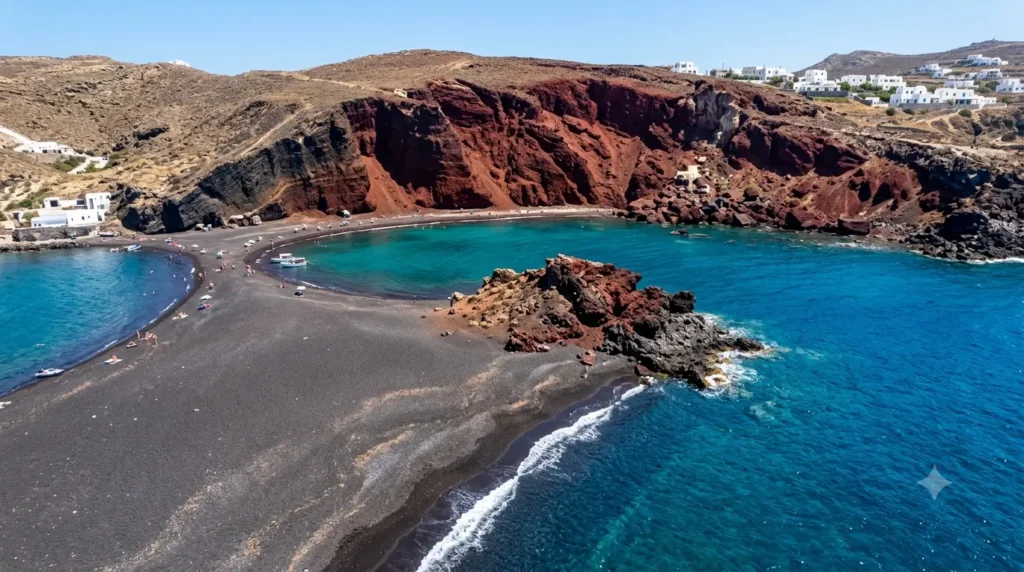
Centuries of volcanic activity left Santorini with black sand, deep red cliffs, and water that turns dark blue just meters from the shoreline. None of it resembles the golden sand and turquoise shallows found elsewhere in Greece. That difference is the point — Santorini beaches look like nowhere else on the planet.
Perissa and Perivolos Black volcanic sand running several kilometers along the southeastern coast. Both names refer to the same continuous shoreline — the division exists mainly for the benefit of businesses operating on each section. Water clarity runs strong throughout. Black sand pulls in heat fast under direct sun — footwear between towel and waterline becomes necessary by mid-morning on any clear July or August day.
Red Beach A short coastal path from the Akrotiri archaeological site leads to this cove. Deep red and ochre volcanic rock rises directly above dark sand. The color combination — red cliff, black sand, blue water — looks digitally altered in photographs but matches reality exactly on arrival. Rock does loosen from the cliff face above — basic awareness of the surroundings is sensible.
Vlychada White ash cliffs eroded into irregular shapes line the southern Santorini coastline above this beach. Fewer visitors than Perissa or Kamari. The cliffs give the beach a quality that photographers return to repeatedly. Long enough that space remains even at peak summer capacity.
Mykonos — Energy on the South Coast, Quiet on the North
Mykonos beaches split into two completely different experiences depending on which coast you choose. The southern beaches run loud and organized through summer. The northern coast runs quiet and largely empty. Neither is better — they suit different trips entirely.
Paradise Beach Sunbed lines cover the full sand length. Music plays from multiple points simultaneously. From mid-afternoon the sand fills with music, crowds and non-stop activity until late night. If that atmosphere is what you came for, Paradise delivers it well. If not, the northern coast exists for exactly that reason.
Agios Sostis Agios Sostis sits on the northern coast with none of the bars, sunbeds, or music that run continuously on the southern side. Water quality matches the south coast completely — same clarity, same warmth. No vendors, no fees, no noise — just open beach and water. A rough road filters out visitors who are not specifically looking for this.
Elia The longest beach on Mykonos without the full club energy of the southern hotspots. Pebbly entry into clear Aegean water. Sunbed rental available for those who want it. A boat connection runs to the main harbor through summer. Elia sits between the two Mykonos extremes and suits travelers who want organization without the non-stop festival atmosphere.
Rhodes — Eastern Coast Beaches With Medieval City Access
Rhodes holds the most complete medieval walled city in Europe alongside an eastern coastline sheltered from open wind. The western coast faces stronger conditions that produce water sports rather than calm swimming. Choosing which coast to base on shapes the entire Rhodes beach experience.
Tsambika A long golden sand arc on the eastern coast. Calm, clear water suited to families and swimmers who want consistent conditions. A monastery crowns the hilltop above — the climb takes 20 minutes and delivers a view across the entire eastern coastline as reward. Sunbeds cover the central section. Both ends of the beach run noticeably quieter.
Anthony Quinn Bay A small rocky cove south of Faliraki. Named after the actor who purchased land nearby after filming here. The rocky floor and sheltered position produce water clarity that outperforms sandy beach alternatives on the same coast. Snorkeling here without specialist equipment returns strong results compared to most eastern Rhodes alternatives.
Prasonisi The southern tip of Rhodes where the Aegean and Mediterranean meet. Both seas visible from the narrow sandy strip that connects the tip to the main island. The Aegean side produces strong consistent wind that has made this location a competitive windsurfing and kitesurfing spot for over three decades. The Mediterranean side stays calm enough for swimming at lower tide levels.
Hidden Greek Islands With Beaches Worth the Journey
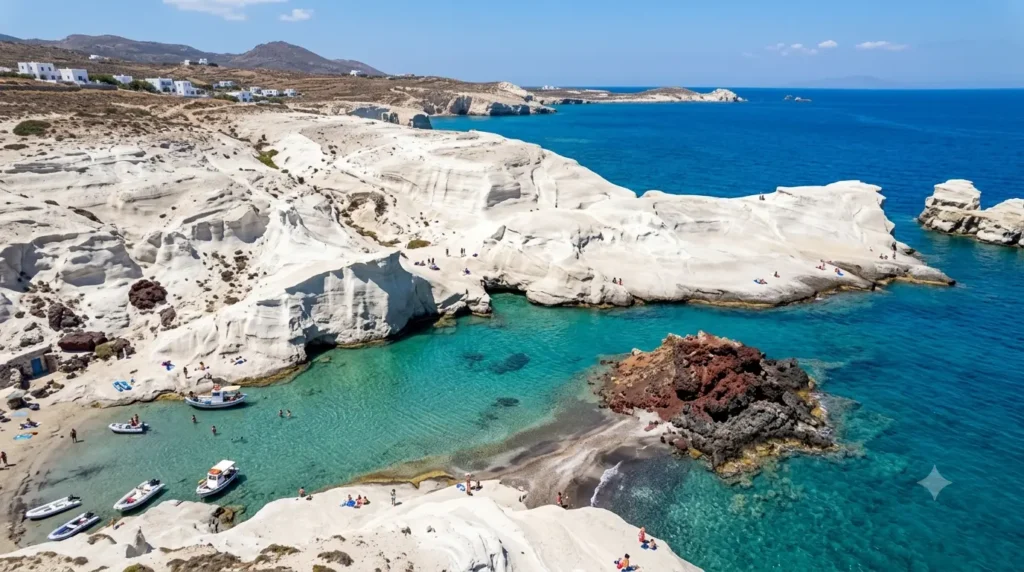
The best beaches in Greece extend well past the four islands that appear in most international coverage. Several lesser-visited islands hold beaches that match or outperform their famous counterparts without the crowds or the premium pricing that fame generates.
Milos — Sarakiniko White volcanic rock shaped by wind and water into smooth curved surfaces above a turquoise cove. Sarakiniko looks unlike any other beach in Greece. The rock creates natural diving platforms, shaded hollows, and positions above the water that no conventional sandy beach can replicate. No facilities on site — bring everything needed for the full day.
Kefalonia — Myrtos White pebbles at the base of limestone cliffs on three sides. Water running a shade of blue that camera screens show accurately but that still surprises on arrival. The road down from above is narrow and steep. The beach has no shade. Both facts stop mattering within minutes of reaching the water.
Naxos — Plaka Five kilometers of fine sand on the western coast backed by low dunes. Naxos sits on the main Cyclades ferry route between Mykonos and Santorini but draws a fraction of their visitor numbers. Plaka runs long enough that August crowds thin out within a short walk from the main access point. The island produces its own food — cheese, potatoes, citrus — at quality levels that make eating well here straightforward and affordable.
Lefkada — Porto Katsiki White cliffs drop to white pebbles and water grading from pale green in the shallows to deep blue beyond. Reached by steep staircase from the road above or by boat from Nidri. Porto Katsiki appears consistently on European best beach lists. The visual case lands immediately on arrival without needing context or comparison.
Greece Beach Travel — Key 2026 Practical Details
Water Temperature Aegean Sea in summer: 24 to 27°C Ionian Sea in summer: 22 to 25°C Both seas carry warmth through September — late summer water temperatures often exceed July levels after months of accumulated heat.
Best Months to Visit June combines warm water, long days, and pre-peak accommodation rates across all islands. September carries the warmest water of the year alongside noticeably thinner crowds than August. July and August bring peak temperatures and peak crowds simultaneously — popular Santorini and Mykonos beaches in August fill fast and require early arrival to secure space.
Getting Between Islands Piraeus port south of Athens connects to most Cyclades islands by ferry within 4 to 8 hours. Fast catamaran options cut travel time significantly on popular island routes. Domestic flights from Athens reach Santorini, Mykonos, Rhodes, Crete, Corfu, Kefalonia, and Milos in under an hour. Booking ferry tickets 4 to 6 weeks ahead secures better options and avoids sellouts on busy summer routes.
Beach Entry Costs All Greek beaches are publicly accessible at no charge by law. Sunbed and parasol rental at developed beaches runs €8 to €20 per day for two loungers. Food and drinks at beach bars on Mykonos and Santorini carry significant premiums. Quieter beaches cost nothing once you arrive.
Frequently Asked Questions
What are the best beaches in Greece for families?
Family-friendly best beaches in Greece prioritize shallow calm water and sandy entry points. Elafonisi in western Crete tops this list — the lagoon’s shallow warm water suits young children better than almost any other Greek beach. Tsambika on Rhodes, Kamari on Santorini, and Plaka on Naxos all combine safe swimming with sunbed facilities and food options within easy reach. Exposed Atlantic-facing beaches and locations with strong current are worth avoiding for families traveling with young children.
Which Greek island has the clearest water?
Among all Greek islands, Milos water visibility stands a\bove the rest . Kefalonia and Lefkada in the Ionian follow closely. The southern Crete coast facing the Libyan Sea delivers strong clarity on beaches accessible by boat. Rocky-floored beaches produce better snorkeling visibility than sandy ones across all Greek islands — sand stirred by swimmer movement reduces underwater clarity significantly compared to rock and pebble seabeds.
Which months work best for Greek beach trips?
June and September deliver the strongest overall conditions across the best beaches in Greece. June brings warm enough water, long daylight hours, and accommodation rates below the July-August peak. September carries water at its warmest after months of summer heat, with crowd levels dropping significantly from August. July and August are peak months — warmest conditions but highest prices and busiest beaches across all popular islands.
Are Greek beaches expensive?
Beach access across Greece costs nothing by law. Sunbed rental at developed beaches runs €8 to €20 per day for two loungers. Santorini and Mykonos beach bar pricing runs significantly higher than other islands — €8 to €15 per drink at beach clubs on the southern Mykonos coast is standard in peak season. Remote and undeveloped beaches carry no costs beyond transport. Accommodation drives the largest budget variable — Santorini and Mykonos peak season rates run two to three times higher than equivalent quality on Naxos or Milos.
How do Greek beaches compare to other Mediterranean destinations?
Greek beaches compete strongest on water clarity, island variety, and the combination of historical depth alongside beach quality. Italian Amalfi and Sardinian beaches match Greek scenery but carry higher overall costs. Croatian Adriatic beaches offer comparable clarity at slightly lower prices with less island variety. Turkish Aegean beaches sit immediately across from the Greek Dodecanese with equivalent water quality at lower prices — the island culture and historical depth that Greek islands carry does not cross that water with them.
Conclusion
The best beaches in Greece do not rank in a single order that applies to every traveler. Crete covers the widest beach variety on one island. Santorini delivers visual drama that nothing else in Greece replicates. The lesser-visited islands — Milos, Naxos, Kefalonia, Lefkada — hold beaches that match their famous neighbors in quality without the crowd levels that fame generates.
Every travel style finds its version of the right Greek beach. The only requirement is choosing the one that matches what the trip is actually for — and then going.-
This article was researched and published by the Techsaaswrote Editorial Team to provide accurate, helpful, and up-to-date travel information for our readers.
