

This london travel guide exists for one reason — to help you spend less time figuring out logistics and more time actually experiencing one of the world’s greatest cities. London rewards prepared travelers. It punishes unprepared ones with wasted hours, unnecessary expenses, and missed opportunities that were right in front of them.
This guide is based on extensive research, current travel information, and insights from experienced visitors to London. Every trip taught me something new about how the city works. This london travel guide 2026 puts everything I learned into one place — entry requirements, transport, top attractions, money-saving tips, and neighborhood advice — written clearly and honestly without padding or filler.
London Travel Guide 2026: Entry Requirements First
Before anything else, American and most international visitors need to know about the Electronic Travel Authorisation (ETA) in 2026. This is a mandatory digital travel permission that must be linked to your passport before you fly. It costs £10, takes 48 to 72 hours to process, and without it airlines will deny your boarding regardless of any other documents you carry.
Apply through the official UK government website at least one week before departure. Keep your approval confirmation accessible offline on your phone. This is the single most important practical step in any london travel guide for American visitors in 2026.
Getting Around London
London Underground
The Tube is your primary tool. It covers the entire city, runs from early morning until midnight on most lines, and connects every major attraction a first-time visitor needs. Use your contactless card or smartphone directly at the barriers — the system automatically calculates the cheapest fare and caps your daily spending so you never overpay.
An Oyster Card costs £7 to obtain and works the same way. For most international visitors in 2026 a contactless card is simpler and equally cost-effective. Zones 1 and 2 cover everything this london travel guide recommends for first visits.
Walking
Central London is far more walkable than most first-time visitors expect. Westminster to Trafalgar Square, the South Bank along the Thames, and Covent Garden through to Soho all reward walking far more than any Underground journey. The city reveals itself at street level in ways that no Tube map can capture.
Top Attractions — What This London Travel Guide Recommends
Tower of London
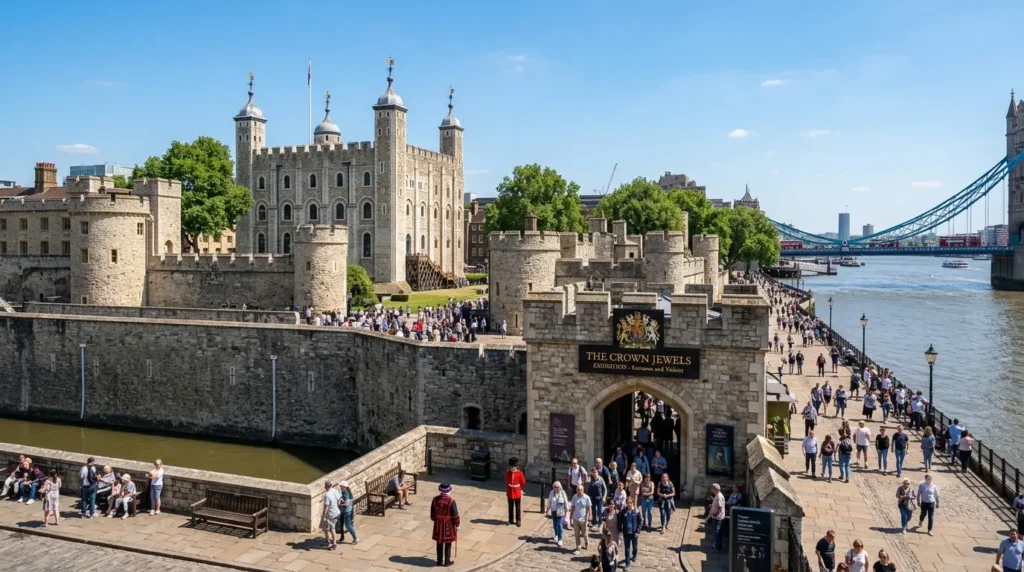
Standing on the north bank of the Thames for nearly a thousand years, the Tower of London is the single attraction that every first-time visitor to London should prioritize. The Crown Jewels displayed inside represent the most impressive collection of royal regalia in the world. The Yeoman Warder tours — included with admission — transform what could be a simple landmark visit into a genuinely gripping experience covering nine centuries of royal history, imprisonment, and ceremony.
Adult tickets cost £34.80 in 2026. Book two to three weeks in advance for summer visits as timed entry slots sell out regularly. This london travel guide strongly recommends morning visits when the Crown Jewels viewing is least crowded.
Tower Bridge
Tower Bridge is free to cross on foot as a working bridge. The Tower Bridge Exhibition — taking you through the Victorian engine rooms and across the glass-floored high-level walkways — costs approximately £12 for adults and is worth every pound. For a memorable view of Tower Bridge, walk along the south bank of the River Thames just beyond the bridge. During low tide, the water often reflects the famous twin towers, making it an excellent spot for photos.
Trafalgar Square
Trafalgar Square sits at the geographic heart of London. Nelson’s Column rises from the center while the National Gallery closes off the northern edge with one of the world’s great art collections — all free to enter for the permanent collection. No london travel guide is complete without recommending an hour simply sitting in the square watching the city move around you before stepping inside the gallery.
Westminster
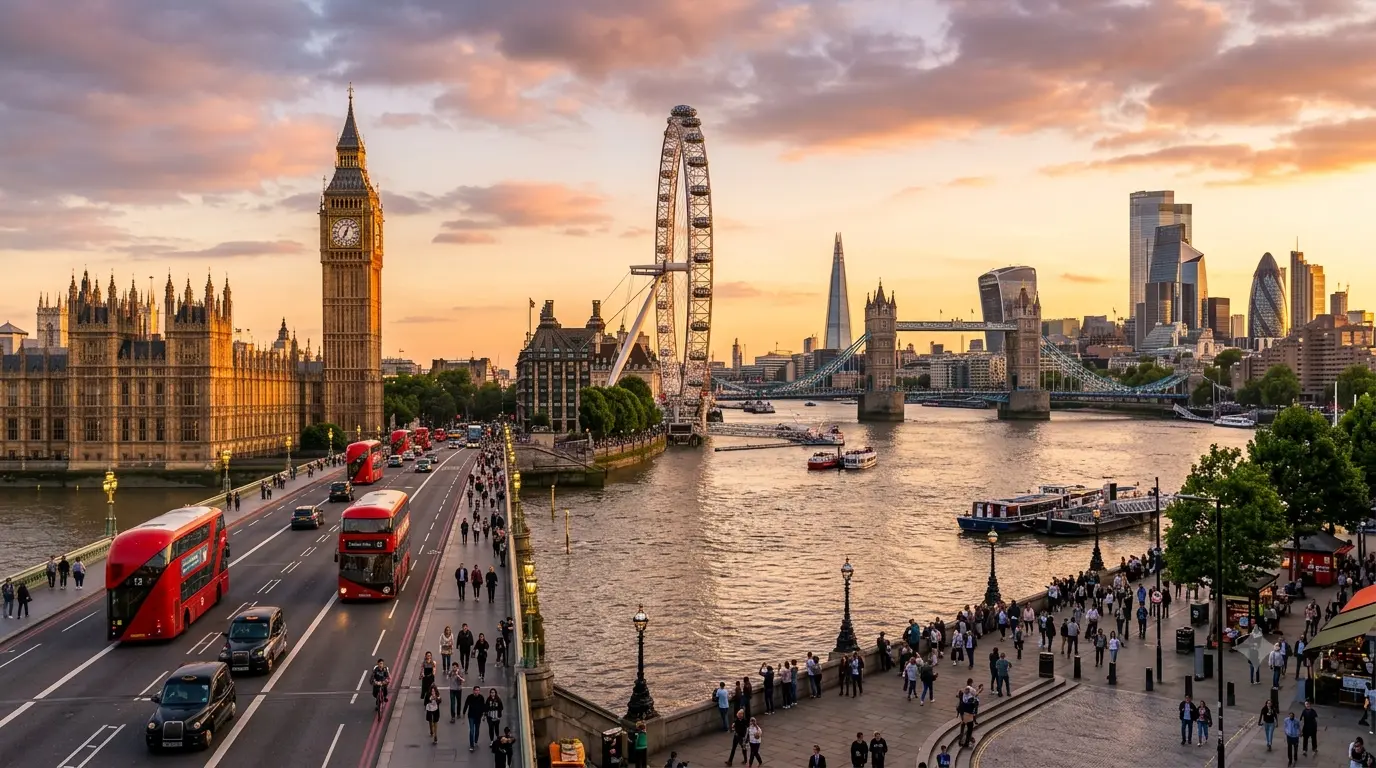
The Westminster cluster — Westminster Abbey (£29), Big Ben, and Buckingham Palace — represents the ceremonial core of British history. Westminster Abbey has hosted every coronation since 1066 and deserves at minimum two hours of exploration. The best view of Big Ben and the Houses of Parliament is from Westminster Bridge at golden hour when the Thames catches the light beneath the skyline.
British Museum
The British Museum in Bloomsbury houses over eight million objects spanning two million years of human civilization across six continents. Entry is completely free for the permanent collection. The Rosetta Stone, the Elgin Marbles, and the Egyptian mummies are the essential starting points before exploring whichever sections match your specific interests. Plan at minimum three hours.
London for Families — This London Travel Guide’s Top Tips
London is exceptional for family travel. The concentration of free world-class museums makes it one of the most cost-effective major European cities for families with children of any age.
The Natural History Museum and the Science Museum in South Kensington are both completely free and both genuinely engaging for children and adults equally. The London Eye at approximately £32 per adult is worth the cost for the experience it delivers — particularly at golden hour. Hyde Park provides free outdoor space with playgrounds for the decompression time children need between museum visits.
Every family-focused london travel guide should mention the Harry Potter Studio Tour — located 20 miles outside central London and costing £52 per adult — as one of the most popular family experiences in the entire country. Book it months in advance as weekend slots sell out regularly.
London for Solo Travelers
This london travel guide is particularly enthusiastic about London as a solo destination. The city’s scale, its pub culture, and its active hostel scene create natural environments for solo travelers to meet others without awkwardness.
Shoreditch, King’s Cross, and Southwark hostels offer social common spaces and organized walking tours that function as natural meeting points. Budget dorm beds range from £25 to £45 per night in 2026.
Free walking tours departing daily from Trafalgar Square and other central points provide historical context, cover different neighborhoods on different tours, and are consistently one of the best first-day activities any london travel guide can recommend for solo travelers.
A neighborhood pub — not a tourist bar near a landmark but a genuine local — remains one of the most socially accessible environments in London. Sitting at the bar with a pint and an open posture leads to genuine conversation with locals in ways that few other cities replicate.
Where to Stay in London
Neighborhood choice significantly affects the quality of a London visit given the city’s size. This london travel guide breaks it down simply: Westminster and Victoria sit closest to the major landmarks but come at a premium price and offer limited neighborhood character for evening exploration.
Shoreditch and Bethnal Green in East London offer the city’s best independent restaurants, cafes, and nightlife at lower prices than central areas. Tube connections are reliable and the neighborhood itself rewards exploration.
South Bank and Borough puts you steps from Borough Market, the Tate Modern, and a riverside walk that connects the major South Bank attractions entirely on foot. It is this london travel guide‘s preferred base for first-time visitors who want to experience London beyond the postcard landmarks.
Money and Costs in London 2026
London is expensive but manageable with the right approach. Budget travelers can keep daily costs to £80 to £120 excluding accommodation by using free museums, eating at markets and local cafes, and using contactless payment on all transport. Mid-range visitors typically spend £150 to £250 per day including accommodation.
Borough Market near London Bridge offers some of the finest food in the city at prices that beat most restaurants — and the quality of a Borough Market lunch would embarrass establishments charging three times the price.
Cash is almost obsolete in London 2026. Your contactless card handles transport, attractions, food, and shopping without exception. If your home bank charges foreign transaction fees, open a fee-free travel card before departing — the savings across a full week are meaningful.
Practical Tips From This London Travel Guide
Book paid attractions in advance. Tower of London, Westminster Abbey, and London Eye all benefit from advance online booking — both to guarantee entry and to save 20 to 30 percent over walk-up prices.
Visit free museums on weekday mornings. The British Museum, Natural History Museum, National Gallery, Tate Modern, and Victoria and Albert Museum are all free for permanent collections and dramatically less crowded on weekday mornings than weekend afternoons.
London is especially enjoyable in May, June, and September, when the weather is usually comfortable for sightseeing and popular attractions tend to be less crowded than during peak summer. Pleasant temperatures, longer daylight hours, and manageable crowds compared to the July and August peak make these months the optimal windows for first-time visits.
Since the weather can be unpredictable, it’s wise to carry a few layers and a lightweight waterproof jacket during any season. London weather remains characteristically unpredictable in 2026 and a morning of sunshine frequently gives way to afternoon rain without warning.
Frequently Asked Questions
Do Americans need a visa for London in 2026?
American citizens do not need a visa for tourism in London but must obtain an Electronic Travel Authorisation (ETA) before traveling. It costs £10, takes 48 to 72 hours to process, and must be linked to your passport. Apply through the official UK government website at least one week before departure.
What is the ideal season to explore London?
This london travel guide recommends May, June, and September as the optimal months. Temperatures sit between 15°C and 22°C, daylight hours are long, and crowds are significantly more manageable than during July and August peak season.
How much does London cost per day?
Budget travelers manage London on £80 to £120 per day excluding accommodation. Mid-range visitors typically spend £150 to £250 daily including hotel costs. The Tower of London costs £34.80, Westminster Abbey £29, and the London Eye approximately £32.50 — all cheaper when booked in advance online.
Is London safe for solo female travelers?
London is consistently rated among the safest major world cities for solo female travelers. The active public transport network, well-lit central streets, and strong public presence across most neighborhoods make solo exploration comfortable at most hours. Standard urban awareness applies in crowded areas like the Tube and Leicester Square.
Which area is the best place to stay in London for visitors?
This London travel guide recommends South Bank and Borough as the best base for first-time visitors — within walking distance of major attractions, excellent food options at Borough Market, and a riverside atmosphere that feels genuinely London rather than generically tourist.
Conclusion
A good london travel guide for 2026 comes down to a few essentials: sort your ETA before flying, use contactless payment for everything, book major paid attractions a few weeks ahead, and leave deliberate space in your itinerary for the unplanned moments that define any memorable city visit.
Tower Bridge, Trafalgar Square, Tower of London, and Westminster will be exactly as extraordinary as you expect. But the meal you find by accident, the view nobody told you about, and the conversation in a neighborhood pub that turns into an evening you did not plan — those are what make London the city people return to again and again.
This article was researched and published by the Techsaaswrote Editorial Team to provide accurate, helpful, and up-to-date travel information for our readers.
